What Tomorrow Brings
by Daniel Gordon
“Do I know you?”
She wipes her hands on the same, darkly stained apron, stitched over the years with checkered patches. The wooden floor creaks beneath her tiny steps.
“Yeah, we know each other. Though it’s been quite a while,” I say, and search for signs of recognition that don’t come. She still wears her thick, silver hair in a tight bun, but the skin on her cheeks hangs looser than it used to. She extends her hand towards me. It is grey and crowded with age spots, yet there is an unexpected firmness to her handshake.
“I’m your grandchild,” I say and smile, perhaps too brightly.
She brings her hands to her chest. “You’re…”
“Liam’s daughter, .”
She seems stuck in the moment of realization. From outside, I hear the clucking of hens, which my grandparents have always kept in a large pen.
“Please, sit down. Can I get you some tea?” she finally asks.
“Tea would be lovely. Let me make it.”
“Nonsense,” she mutters and limps to the kitchen, which is connected to the living room by a wide doorway.
I try to spot the changes. There’s a new dark red cushion on the sofa and a wooden bowl at the center of the table filled with pinecones. They switched to a small flat-screen TV. None of the framed photographs have been taken down, none added. I see my father at three or four years old, walking through the snow, illuminated by a streetlamp. He is in his late teens in another one, standing on top of chopped logs, wearing a bright purple jacket and a crooked grin. There is a picture of my parents’ wedding, showing both dressed in what might pass as elegant attire to people who do not care about fashion[1] . I also find a younger me, embracing a slobbering Labrador whose name I’ve long forgotten. My grandparents have no pictures of themselves.
I follow through the doorway and sit at the table. The smell of old things inhabits the kitchen: of dust that has settled between the floorboards and of the cooking-oil fumes that have steeped the walls over decades. But I also smell the soup they had for lunch and catch a whiff of ground coffee.
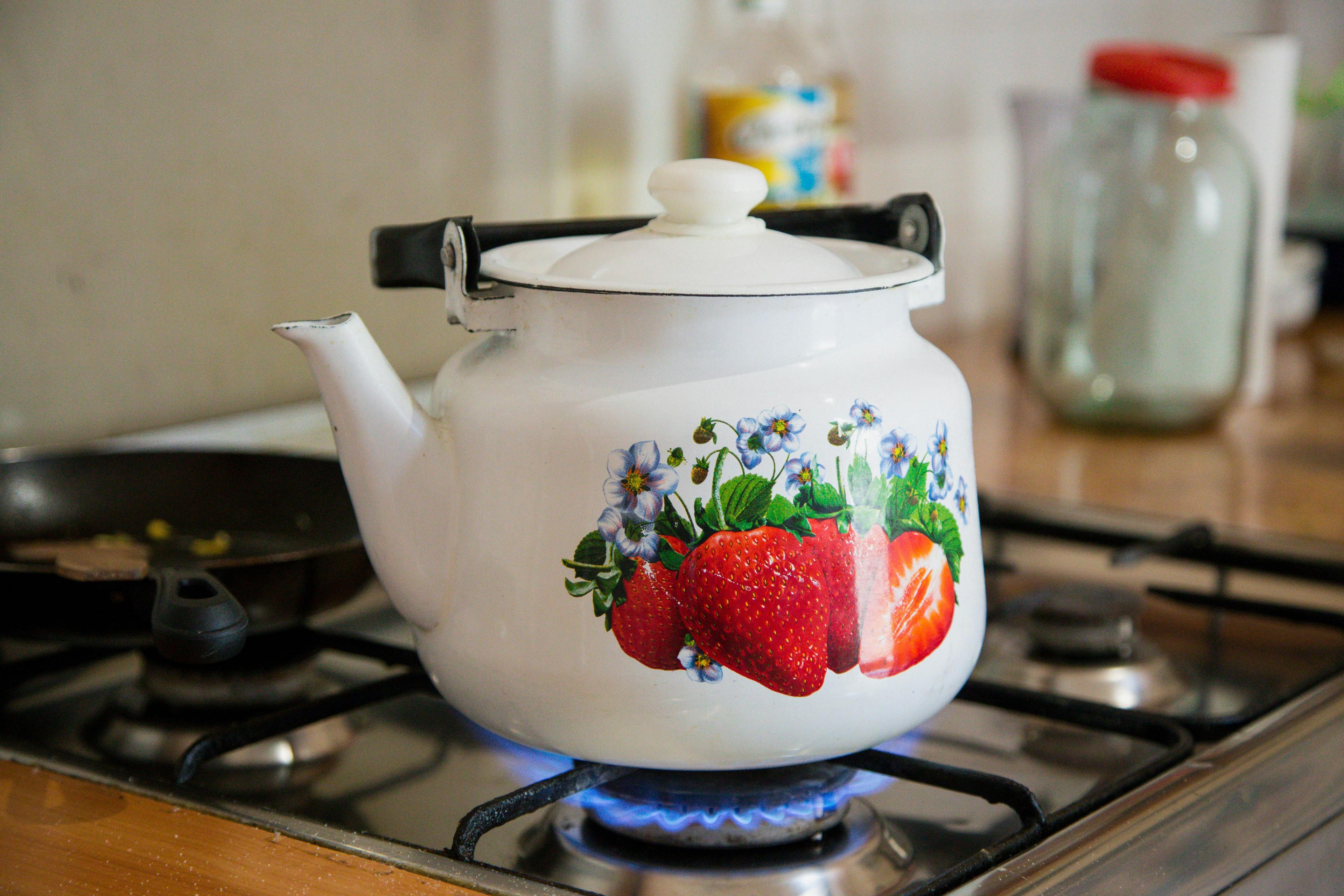
My grandmother fills the kettle and places it on its base, then turns to face me. “But you still live here, don’t you?”
“Not anymore. I live in Vienna.”
Her eyebrows shoot up, she draws a deep breath and then nods, as if considering the texture of this information. “Vienna. That’s awfully far away.”
“It certainly is. That’s why I can’t visit as much as I’d like to.”
The seconds tick along on the miniature railway clock. I used to stare at it every visit. While they were talking about politics or people I didn’t know, I would sip on juice and count the “15 more minutes” my father promised it would take for us to leave after we had already been there for hours. I would also stare at that small piece of tapestry that still decorates the wall to my right. It is white, with flowers embroidered at its edges. And stitched into it is that sentence I learnt by heart so many years ago: “What tomorrow brings, God alone decides. You shall never be dissatisfied!”
“Can I get you anything?” my grandmother asks as the kettle sounds out.
“Just the tea, thanks, Gran.”
I recognize the old books, shelved in the corner of the room. A few dictionaries, two novels and lots of crossword puzzle books, which were either solved long ago or will stay unsolved forever. There’s a calendar we once sent them for Christmas, each month illustrated with a family photograph. It is off by twenty-five years, though the month is right.
I was eight at the time.
The door squeaks as it opens, and I hear him before he walks into the room. Age has not diminished my grandfather’s height or bent his spine in the slightest. Good posture was always a point of pride for him. He went bald long before I was born, and I remember him much as he stands now. He, too, is wearing an apron, with his folded glasses and a carpenter’s pencil stuck into the breast-pocket.
I remember now that I would always feel nervous shaking his hand, like he would judge my character based on the quality of my grip; whether it was too soft or too hard, whether it lasted for too long or too little time or was given awkwardly. He was, and still is, the kind of man who would be uncomfortable if subjected to a hug.
“Elizabeth,” he says and stretches out his hand. His low voice used to make my glass vibrate if I held it at a certain angle, but one and a half decades have eroded much of its resonance. “It’s nice to see you again.”
I squeeze his palm as hard as I can. “Yes, it’s been too long, I know.” Maintaining eye contact is vital for a good handshake. I fight the impulse to look away.
“Well, you’re here now. That’s what counts,” he says, and only then releases. “You’re making tea? Let me take care of that.” He guides my grandmother to the table and sits her down opposite me.
She seems lost at first, but then looks at me with gentle eyes: “But you’re not from around here, are you?”
“Sure I am. And I used to visit all the time. As a kid. I remember spending lots of evenings here. With Mum and Dad. That was before we moved away.”
I grab the twenty-five-year-old calendar and leaf through the months, stopping at November. The photograph shows shows me sitting on my father’s lap, both of us lifting our glasses, filled with beer and juice, toasting some unremembered occasion.
“You see, that’s Liam. Your son. And this is me, Elizabeth.”
Her hands drop with a slight thud. “Elizabeth, of course.”
I reach across the table and lay my palm on hers. My grandfather opens the cupboard and moves some mugs back and forth to find the right one.
“But you still live here?” my grandmother asks.
“No, actually, I live in Vienna now.”
She raises her brows and puffs through pursed lips with the hint of a whistle. “Vienna? Well, that’s really something. So far away, though, isn’t it?”
“Yes, it is,” I say and smile.
“Would you like some milk with that?” my grandfather asks as the kettle boils. He opens the fridge and takes out the milk carton before I’ve answered.
“Please,” I say.
He pours a bit of milk into the mug, drops the teabag in and only then fills it with hot water.
“So, tell me, how is life treating you?” he asks.
I tell them about my flat and the small balcony on which I sit and drink tea every morning; about my part-time job and the many things I do when I’m not working. I speak of my cat and of my boyfriend. My grandmother keeps filling silences with the same questions, to which I give the same answers: “I grew up nearby but now I live in Vienna;” “we do know each other. I am your granddaughter;” and “I’m fine with just tea, thank you.” But mostly, she holds an unfocused gaze, occasionally glancing at my grandfather when he speaks. He switches the subject to politics, the way he always used to, though now I know enough to understand what he is saying.
This brings fewer silences for my grandmother to fill. I feel bad for excluding her, but I don’t know how not to. I am only half-listening to his political rant. I try not to let my drifting attention show by nodding at times. In the pause that follows his final point, my grandmother asks whether I am from around here.
“Yes, I grew up nearby. I used to visit a lot with Mum and Dad.” I once again point at November’s photograph. “Here’s Liam, your son, and this is me, your granddaughter, but I’m much older now.”
“Liam’s daughter?” she asks and sits up a little straighter. “He never comes to visit us anymore. How is he doing these days?”
My grandfather crosses his arms. I take a sip of tea, which has turned lukewarm by now. The seconds ticking away on the miniature railway clock seem to both slow down and grow louder. I look at the photograph of me and my father. I have forgotten all about that day.
“He’s doing well,” I finally say, and clear my throat. “He likes to keep busy, you know? He tends to the garden and spends lots of hours reading in the sunshine.”
I tell her about his little projects around the house. How he’s always fixing things. I say he and Mum still fight sometimes, but not as much as they used to. I tell her how he’ll find joy in the smallest things, sometimes, like the way the air thickens just before it rains in summer, or how a hawk will just hover in the air when it is searching for prey. I only see him two or three times a year, but when I’m home, we sit together at dinner, and we talk until after midnight, and we drink too much wine.
I say, “He’s happy, I think.”
My grandmother gives small, shaky nods. She studies my face a little closer now, and when I finish, her eyes wander to the calendar. She touches the picture, as if expecting to feel the skin depicted on it.
“I’m glad to hear that. Please tell him that—that he must visit us,” she says.
I smile at her and nod.
Silence sets in and spreads, growing ever thicker, until my grandfather’s chair groans below him. His arms are still crossed, but his chin has fallen to his chest, and his back is rounded, as if his body had gradually deflated. My grandmother looks out of the window, following the clucking of a chicken. She cranes her neck, then looks back to the table and up to me.
“Would you like some tea?” she asks.
“No thank you, I still have some.” I lift my mug and swirl the splash of tea that’s left.
“But you’ll have some biscuits?”
“I’m good, thank you.”
Eight, ten, then fifteen seconds strike. And as I’m trying to think of things to say, she asks: “I don’t think I know you, do I?”
My cheeks grow tired from the smile I maintain. “Of course you do, I’m your granddaughter. I’m Liam’s daughter.” I lift the calendar and point at us.
Her expression widens in mild shock. “Liam’s daughter,” she says faintly. “He really should visit again. It’s been so long. Tell me, how is he doing?”
I take a breath, ready to repeat.
“Elizabeth, come on.” My grandfather sits up, wincing a little as he straightens his spine. “There’s no need to do this. Liam is gone. He was taking flying lessons. The plane crashed. That was twenty years ago, and we have learned to live with it. I don’t see the point in pretending it didn’t happen.”
My grandmother does not look at him. Her right hand kneads the knuckles of her left. She drags her fingers over the frail bones there. My grandfather sinks into himself. He closes his eyes and massages his left temple.
“I’m sorry, Elizabeth,” he says, with barely a mumble, “it’s just that…” He can’t find the words. He walks to the sink and opens the tap. He takes a glass but doesn’t fill it. The water floods down the drain with a metallic splutter. Not knowing where to look, I study the embroidered flowers on the tapestry to my right. “What tomorrow brings…”
“You’re not from around here, are you?” my grandmother asks. Her pained frown has melted away, and she looks at me, a kind expression on her face. I hear the rising pitch of water rushing into a glass.
“I grew up nearby. I used to visit all the time. I’m Elizabeth,” I say, but I speak quietly, and I worry that she didn’t hear me.
“Liam’s daughter?”
I blink away the stinging in my eyes. “Yeah, that’s right. Liam’s daughter”.
She leans over the table to touch my palm. Her skin feels brittle, like it might tear or dissolve.
“I must say we miss him. How is he doing?”
The floorboards creak under my grandfather’s steps. He sets his glass on the table but does not sit down. My grandmother looks up at him, but his eyes are fixed on something to my right. There’s a small tremor in his cheek.
“She was telling us that he’s keeping busy. She was telling us he’s happy.” He rests his weight on the back of the chair with both hands. A splatter of raindrops falls onto the window. “If you’ll excuse me, there’s something I have to finish in the workshop.” He checks whether his glasses and carpenter’s pencil are still in his breast pocket.
My grandmother watches him leave through the doorway and stares at the empty space he has left behind. I see her lips form a single word, whispered only to herself: “Happy.”
She seems to have forgotten I am here, but I am comfortable in the silence. I place the calendar back onto the bookshelf, letting November and its photograph face the room. I pull at the spine of one of the crossword books and open it. About two-thirds of the puzzles have been filled out with my grandmother’s shaky letters. As I leaf through the pages, yellowed with age, I am surprised that I know the answers to some of the clues.
“Do you mind if I take this with me when I leave?”
My grandmother snaps out of her trance and refocuses on me. She seems confused at first but then leans forward and squints at the book.
“Oh, not at all,” she says.
The door handle squeaks again. My grandfather doesn’t walk into the kitchen, but he stays in the living room. I check the clock and wonder how long I should stay, then drink the last sip of cold tea.
The rain now drums against the window. My grandmother clears her throat. She looks at me so closely I feel scrutinized, her eyes clear and attentive. She takes half a breath and holds it.
“We don’t know each other, do we?”
Daniel Gordon
Daniel Gordon is a writer based in Vienna, Austria. His work has appeared in Long River Review, Apricity Press and Thimble, and is forthcoming in The MacGuffin. He works for a local newspaper and spends his free time writing short fiction and drinking more tea than water.